
A Team Rises Above the Taliban
Many sports believe themselves to be a “global game,” but soccer stands alone in its worldwide appeal. While individuals are divided by borders and cultures, soccer has become a global language that we all share and understand.
Sports also allow individuals to celebrate their country and culture, separate from how they feel about their governing bodies. The Afghan National Soccer team has become a fixed symbol of national pride for the thousands of refugees who have left Afghanistan since the Taliban rose to power. The New York Times hired Istanbul-based photojournalist Bradley Secker. He was tasked with documenting the team’s first match since the fall of the democratic government. The match took place in Turkey last November. His images speak to the resiliency of this team, its coach, and its fans. The fans continue to support their compatriots as they create a sense of home away from home.
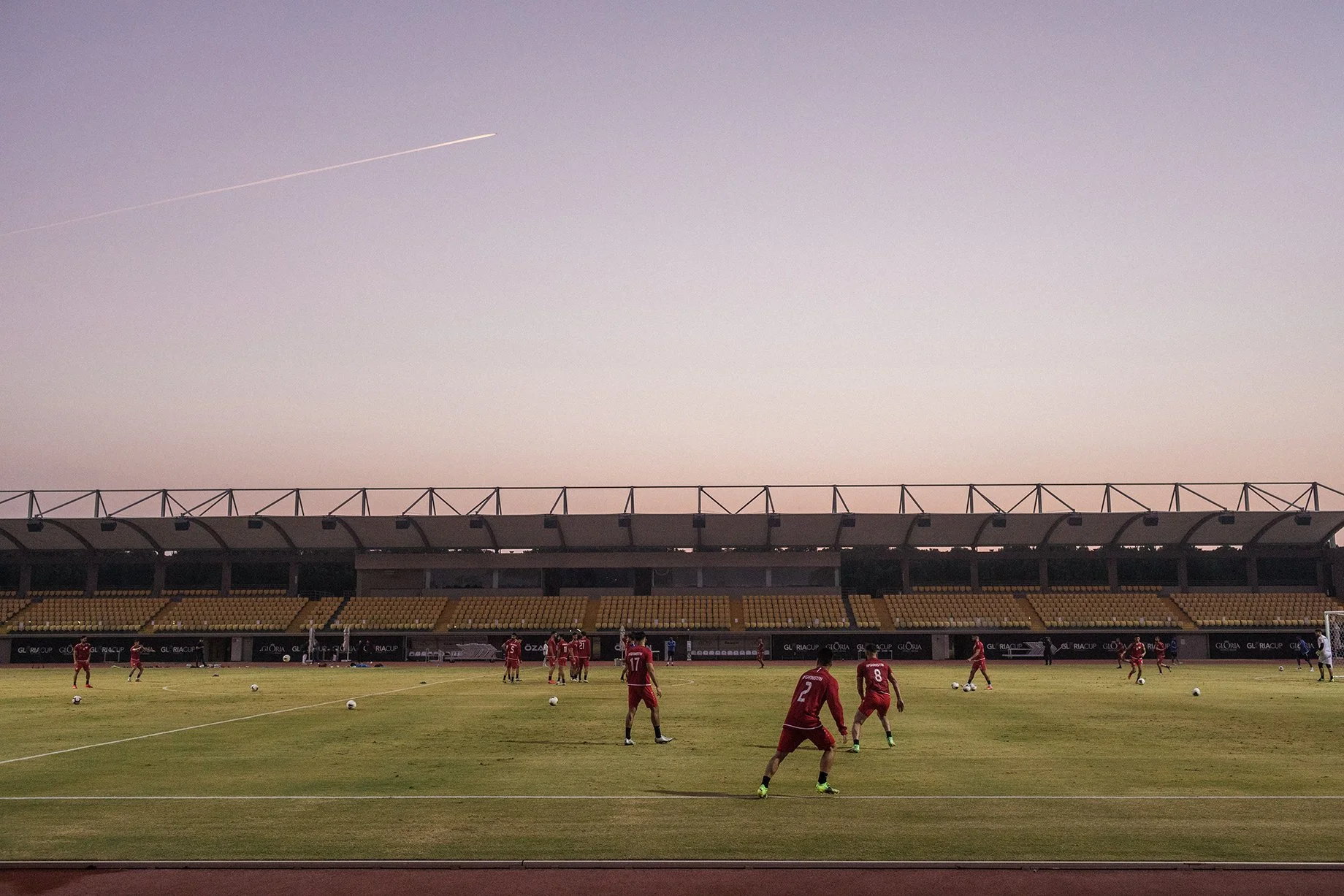
As a U.K. native, Bradley has a general knowledge of soccer, or football, as it is globally known. Still, he felt that working with the Afghan team provided a deeper insight into the politics of the game.
“This story was an exciting opportunity to work on something that had a heavy political and social element, as well as a sports one. ”
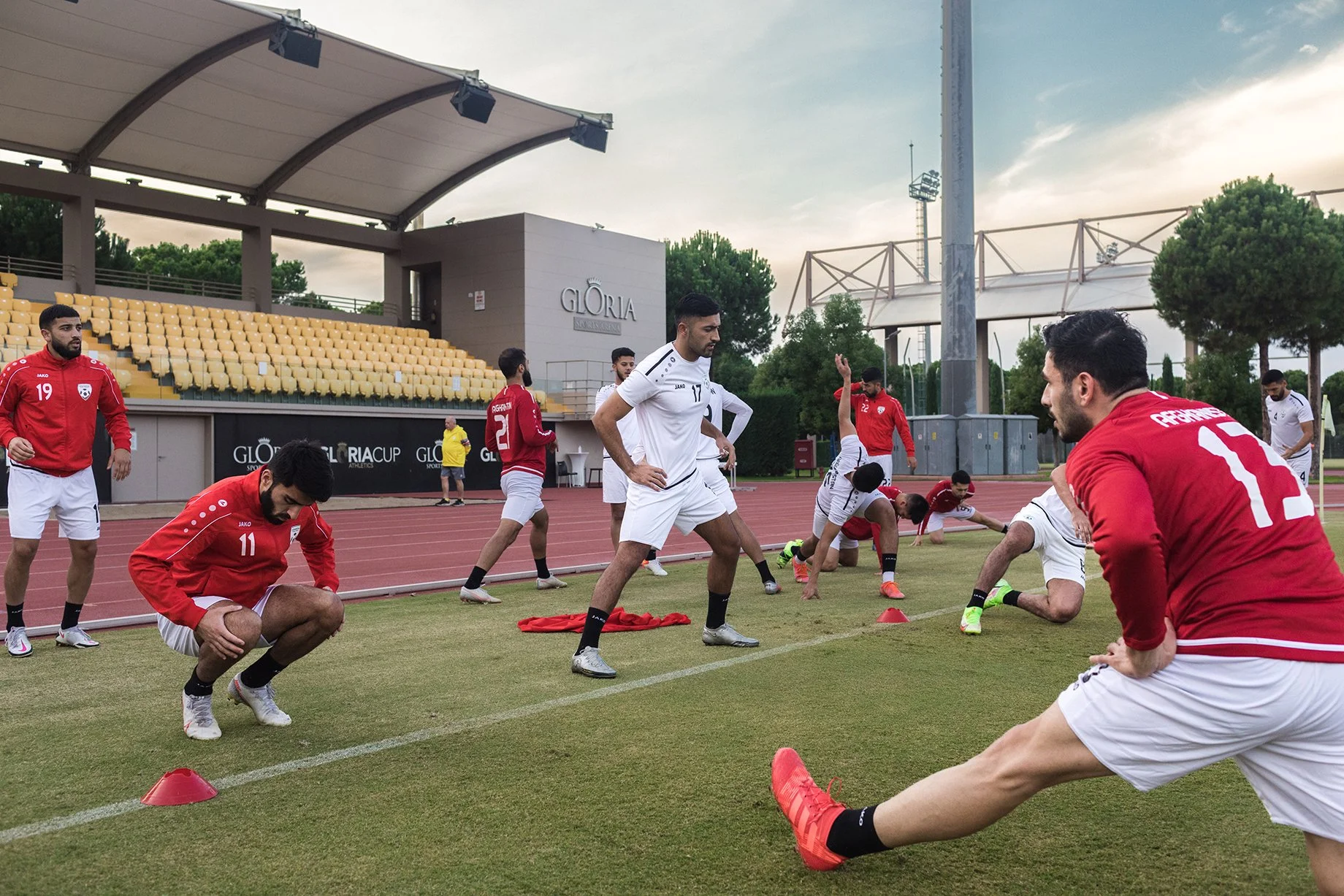
Working alongside fellow Istanbul-based journalist James Montague, Bradley followed the team as they arrived in Antalya, Turkey. The town sits on the southwestern coast of the country and boasts Mediterranean beaches and historic ruins. The players stayed at a luxury resort that provided them a safe place to relax ahead of game day.
While all of the players have roots in Afghanistan, the generations-old political unrest has led many to leave the country and establish homes around the world. The time when they come together for a match is one of the few opportunities for the whole team to engage as one, whether that’s laughing in the hotel or cheering for a goal. Although some of the players still reside in Afghanistan, FIFA has banned the Afghan team from playing at home.
“The team is made up of a collection of Afghan men who now live all over the world. From Australia, the USA, Thailand, Germany, the Netherlands, the UK, and of course Afghanistan. They all flew in to be reunited for this match.”
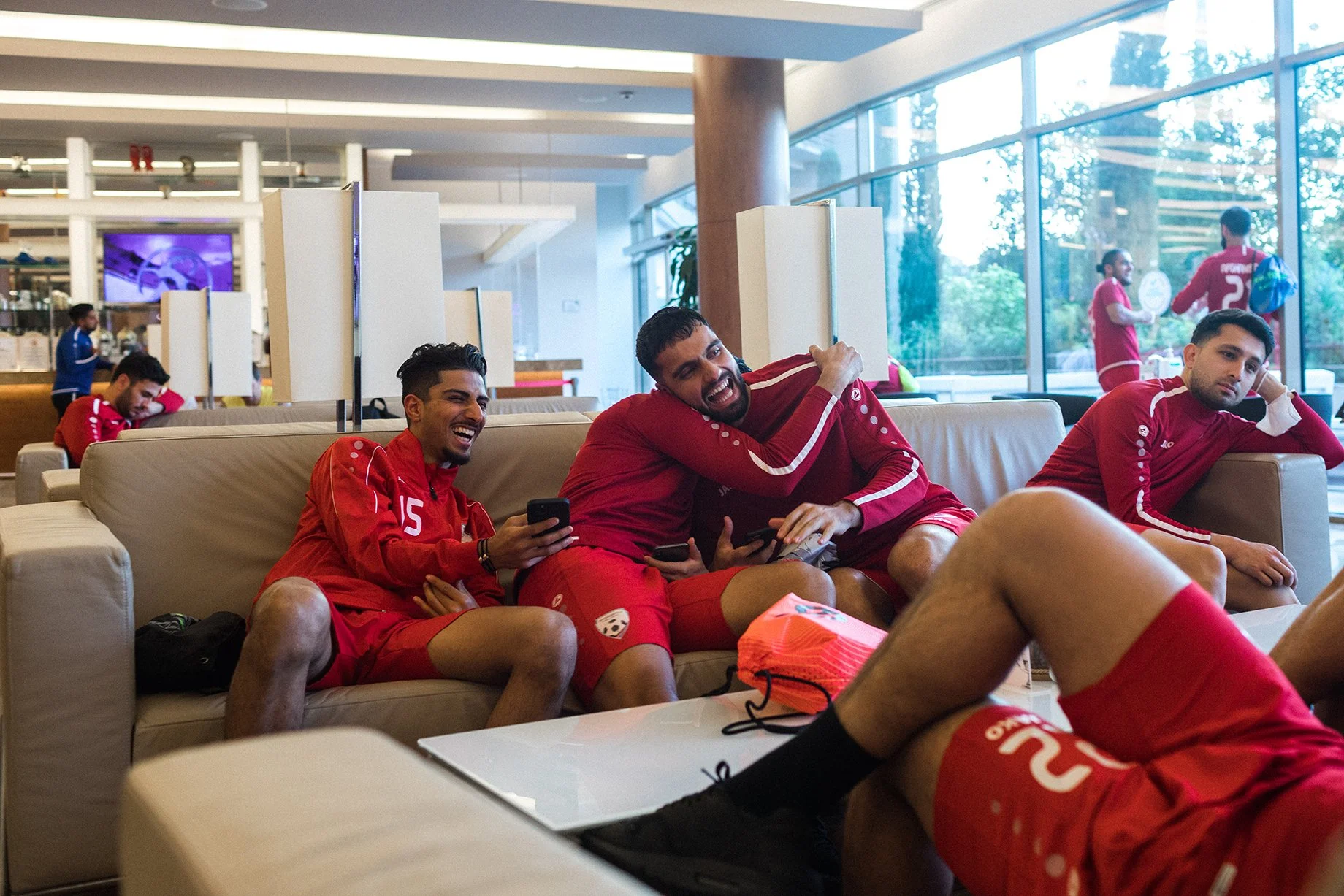
In the days leading up to the match, Bradley drove to the pitch every morning and evening to photograph the team during their training sessions. He appealed to the coach, Anoush Dastgir, for better access to the athletes and was allowed to follow the players during much of their leisure time. By the end of the three days with the team, Bradley had established a close relationship with the Afghan players.
“I wanted the images to be intimate, powerful, and dignified, and to depict the human spirit of the players away from the politics in Afghanistan.”
For Anoush, the New York Times article and Bradley’s images would be the exposure needed to help ensure his team could continue playing. Not only did he arrange the friendly match against Indonesia, but he also found the site for the game in Turkey, arranged flights and visas for players, sourced coronavirus tests, and successfully petitioned FIFA for help in financing the trip.
Anoush was also responsible for shipping all the team’s gear, purchasing soccer balls, and arranging referees. Most importantly, he promoted the game on his own private social media accounts and even negotiated a broadcasting contract so that those still living in Afghanistan could view the match. This was, of course, all done in the downtime when he was not coaching the team.
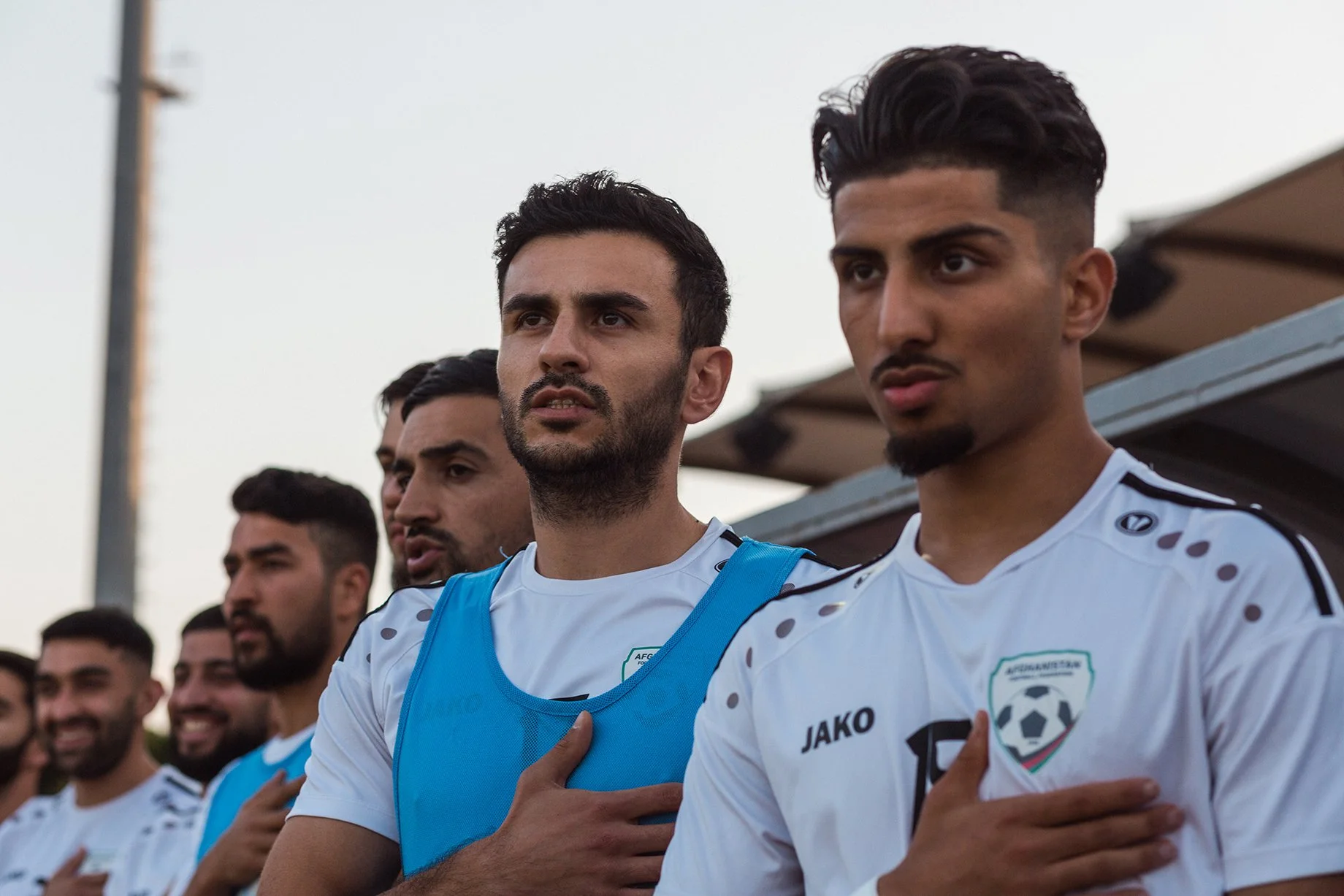
After all this preparation, the team was ready for match day. Bradley, James, and the Afghan National team all gathered on the pitch in anticipation of the big decision Anoush had to make: which Afghan flag would he fly? The Taliban have established a new white flag, with the Shahada (the Muslim declaration of faith) at the center, while the old flag boasts a green, red, and black tricolor over Afghanistan’s presidential palace. Anoush chose to raise the original flag and play the former national anthem, now outlawed in Afghanistan due to a broad ban on all music.
“When the coach insisted that they hold the pre-Taliban takeover flag, the tri-color flag, and play the non-Taliban anthem, the crowd went wild in celebration.”
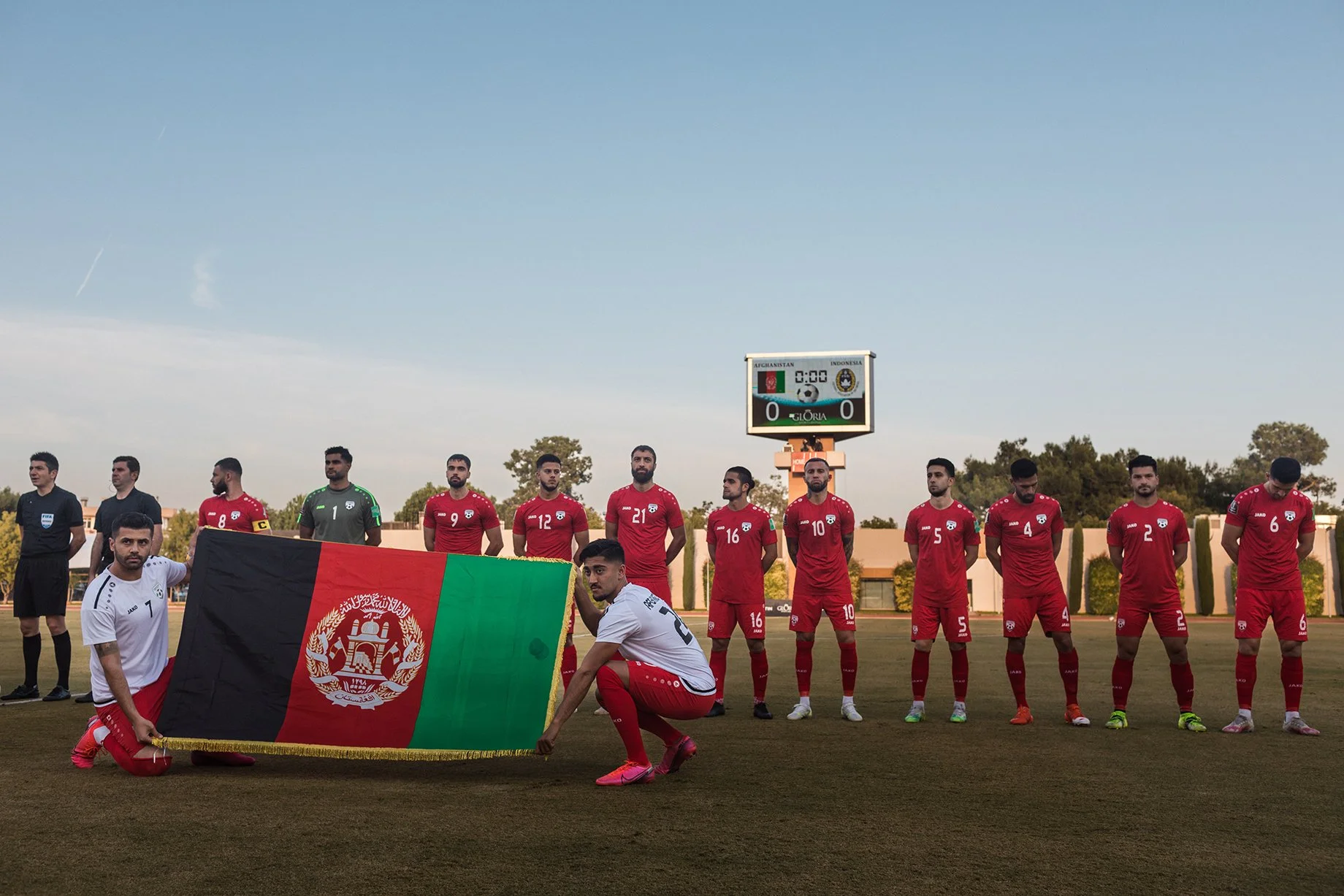
Turkey’s location makes it unique, as it hosts more refugees than any other country. Istanbul, bridging Europe and Asia, serves as the bridge that many cross on their path to freedom. At least 300,000 Afghans have found shelter in Turkey in the last few years. Since the Taliban took over Afghanistan in August, tens of thousands of Afghan migrants have made their way through Iran and eastern Turkey to reach the western part of the country. This match helped refugees who have lost everything find a sense of belonging and peace in a foreign land.
“The fans were Afghans that were either formally or informally in Turkey, and there were fears that the police may arrest some of the fans for being undocumented. Fortunately, this didn’t happen, and it was just an appreciation of the sporting success.”
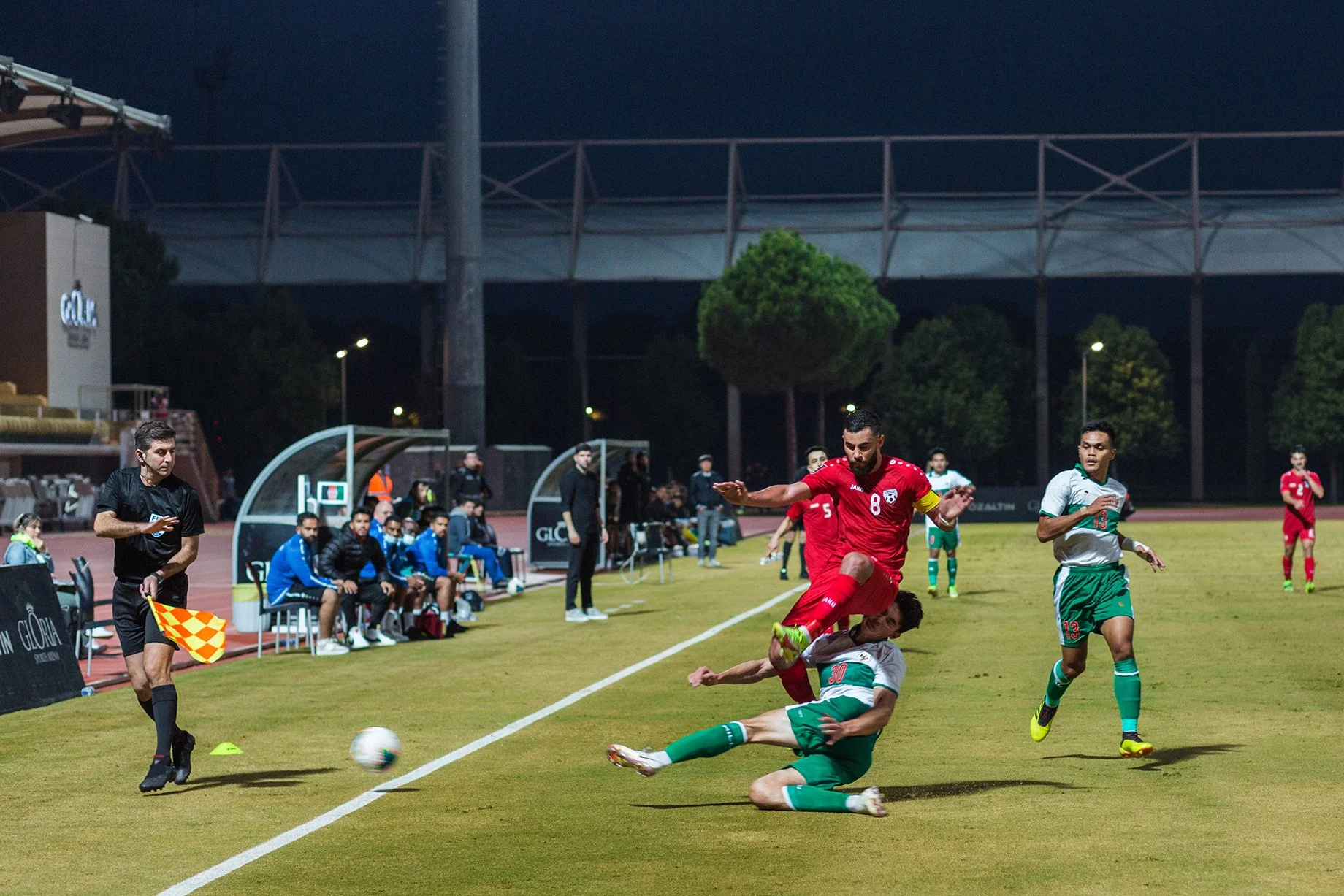
It was truly a sporting success for Afghanistan, which won 1-0 over Indonesia that day. The 600 Afghan spectators in attendance roared as a late goal secured the victory for their team. While the match was intended as a friendly competition, winning gave many Afghan players and fans a powerful sense of pride. It was a moment of national reclamation they hadn’t felt since August 15th last year.
Bradley navigated the pitch to capture the players’ raw emotion as they rushed into a heartfelt group hug. Between the fans screaming and players jumping up and down, the final moments were a whirl of contagious excitement. When we can see a country for more than its darkest days, for more than the conflict that resides in its borders, we get a sense of who the people are outside the turmoil they have faced.
“When the team won the match, the visiting crowd went wild in celebration, even throwing down their phones for players to take selfies with them up in the stands.”
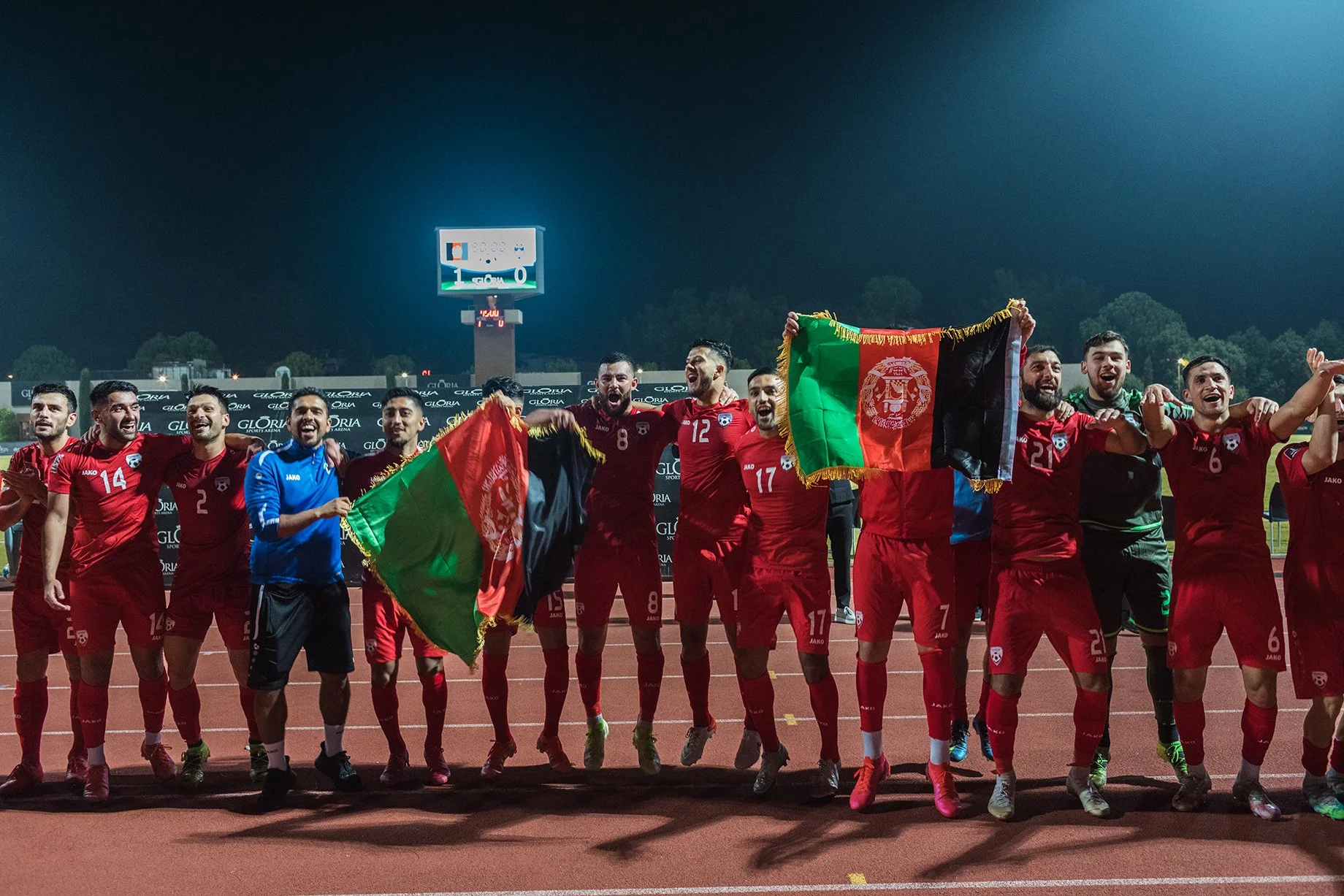
The athletes were incredibly thankful that Bradley was there to capture their victory. Many of them reached out in the days following the match for photos of themselves. They wanted a tangible representation of the value this moment held for their country. Something to hold on to in the wake of Afghanistan’s uncertain future. Even Anoush reposted one of Bradley’s images to his Instagram, with the caption “Our memories will last forever.”
Bradley’s memory of the match will last a lifetime as well. The inspirational assignment was an opportunity for him to learn about a country from the perspective of its citizens. They prove that our sense of home is more than just a physical location. The feeling of home can come from the many people who continue to represent their cultural identity. Wherever they play next, the team carries the unity of 37 million Afghans who now reside across the globe.
“It showed me the unity that sport can bring to people. By overriding the politics and, just for a moment, all the sorrow and hardship experienced from displacement. ”
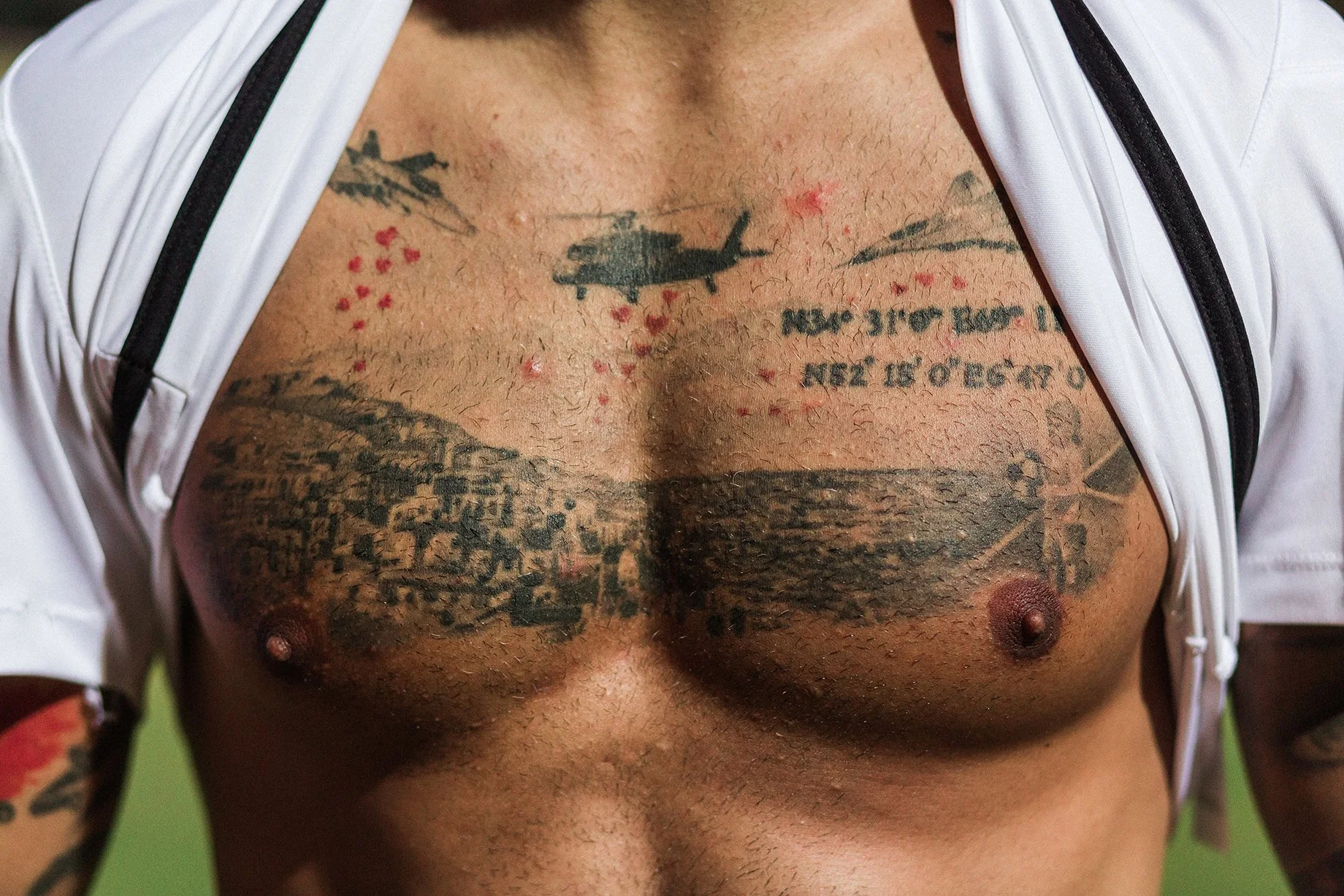
Faysal Sheyesteh of the Afghanistan National Soccer team shows some of his tattoos, which all have a personal significance. On his chest, he has a scene where warplanes drop hearts onto Afghanistan, with the coordinates of a location near Kabul, and one in the Netherlands, where he grew up.
This article was originally published on Wonderful Machine.
