
Native American Ales
Since the inception of the United States of America, indigenous nations have unfortunately been omitted from the country’s narrative through the lack of land acknowledgment and underdeveloped curriculums in education. As we move towards a more inclusive society, many Native Americans continue to courageously advocate for respectful visibility in all aspects of their lives. In an assignment for Outside Magazine, Sante Fe, New Mexico-based Minesh Bacrania recently photographed two Native American women, whose brewery was built from the multi-generational relationship they have with their land.
Minesh was contacted by the publication’s photo editor, Kyra Kennedy, to photograph Bow & Arrow Brewing Co, an Albuquerque, New Mexico brewery founded by Shyla Sheppard and Missy Begay. He had previously photographed the two for a New Mexico Magazine feature and had maintained a great relationship with the founders.
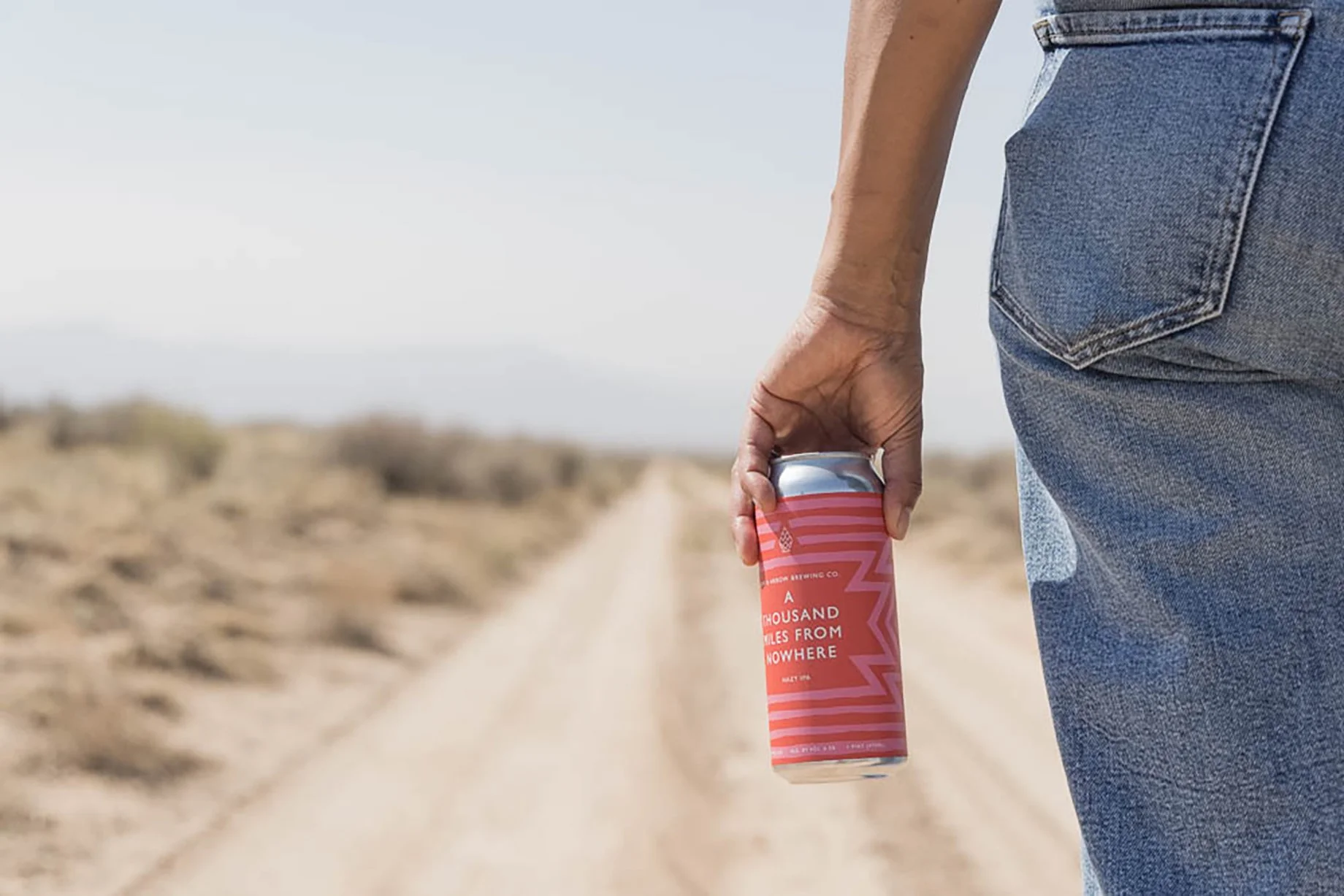
As the first brewery in the U.S. owned by Native American women, Bow & Arrow Brewery is at the forefront of a revolution, paving the way for other women of color to enter the predominantly male microbrewing industry. Yet what sets Shyla and Missy’s ales apart, is their commitment to representing the indigenous perspective by sourcing and cultivating plants from their native land.
“Shyla and Missy really leverage their platform to speak about the land we live on and to ask other breweries to acknowledge the history of that land too.”
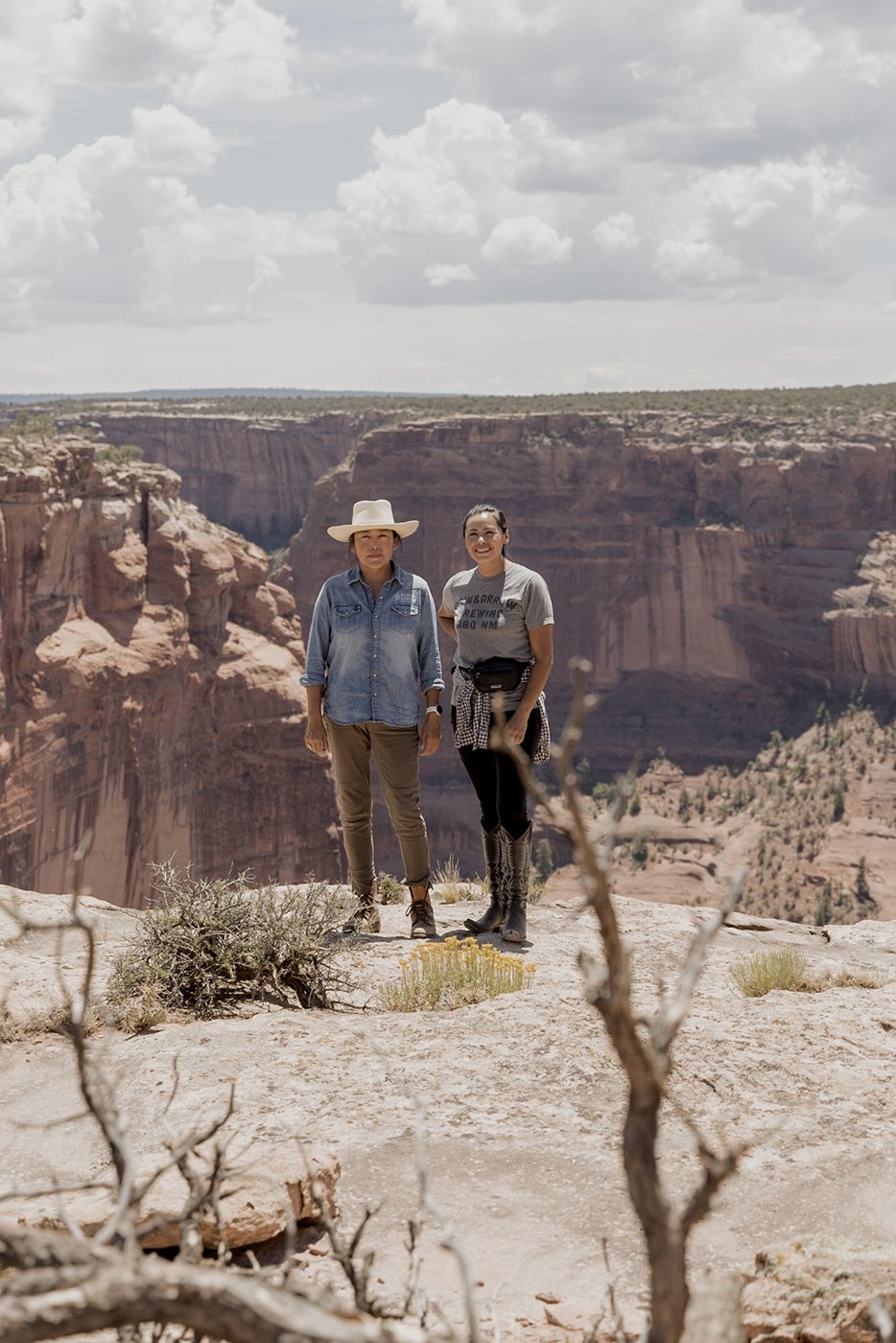
Because the feature was set to publish in September, Minesh spoke with Missy and Shyla in late spring to determine locations that are relevant to their story. The three agreed to focus the images for the article on the brewery’s orchards located south of Albuquerque, however, the harsh drought that has persisted throughout the southwest led them to consider other scenic locations.
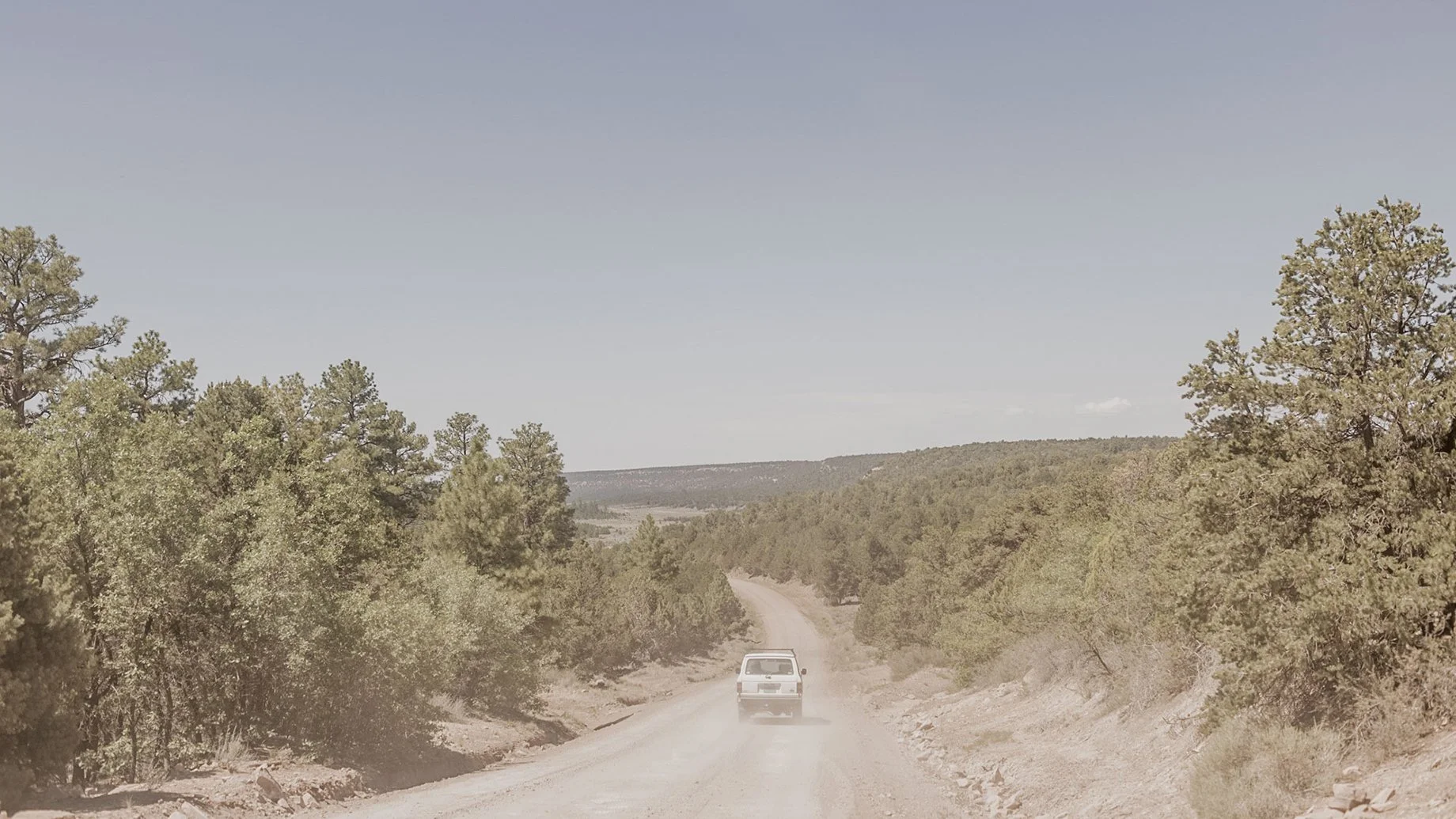
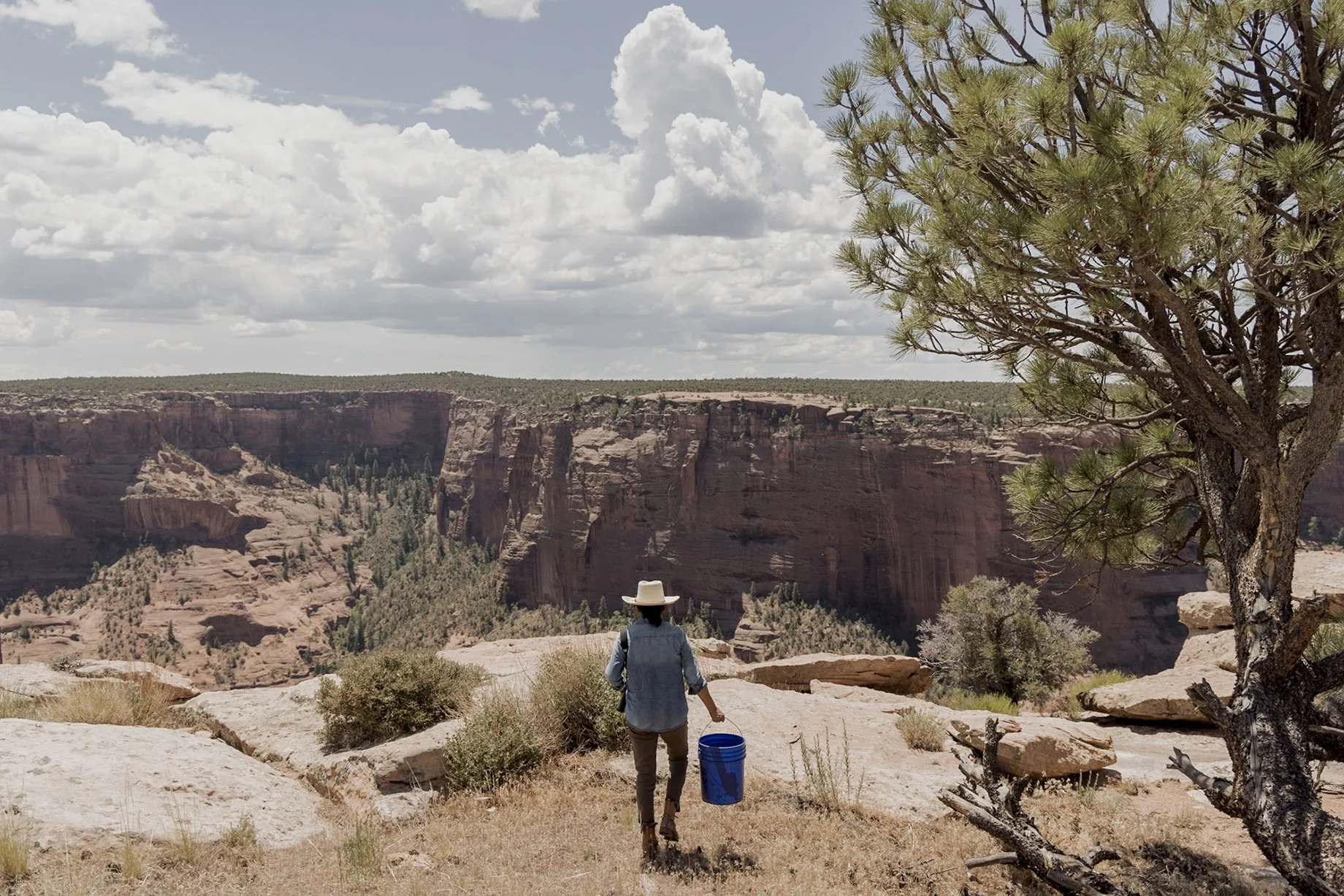
Missy, who is Diné, and a member of the Navajo Nation, met Shyla while in college and introduced her to the southwest. Shyla hails from North Dakota, and is a member of the Three Affiliated Tribes (Mandan, Hidatsa, and Arikara), however, she relocated to New Mexico with Missy, drawn to the sacred energy growing from the desert plants that she now highlights in her drafts. They took Minesh to Canyon de Chelly, where they forage cacti, juniper, and cedar on Missy’s ancestral land.
“We all drove to their foraging sites on Navajo tribal land with Missy and Shyla and both of their mothers, who happened to be there as well. ”
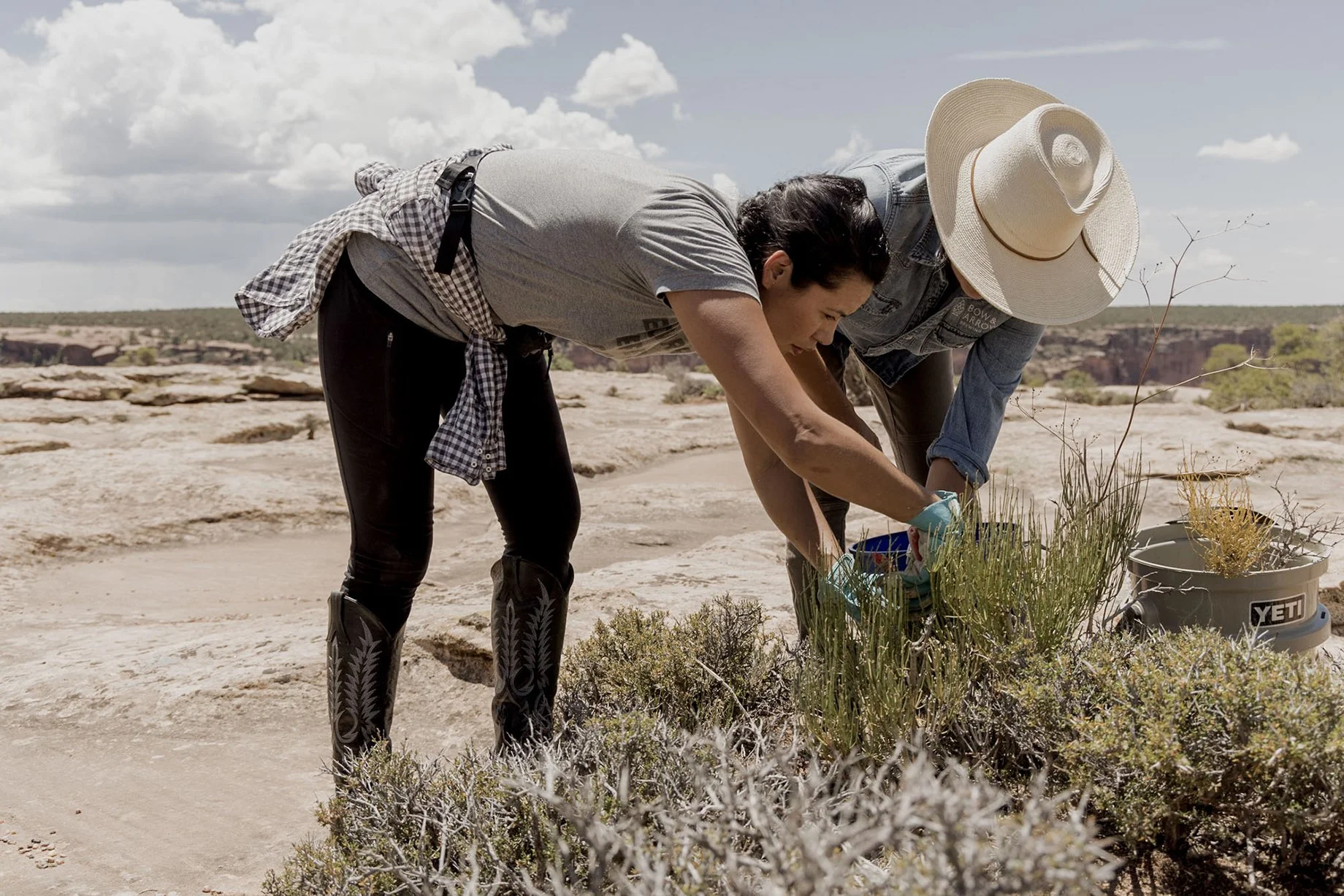
The native women invited Minesh to Missy’s family’s private land, which sits atop the canyon’s rim. As they walked the rocky cliffside, her mother shared stories of growing up and playing on the rim and in the ravines with her siblings. While others may visit Canyon de Chelly, Minesh felt incredibly lucky to be shown this perspective, seeing vistas that only a few photographers have ever witnessed before.
“The land is really remote and not accessible by tourists, which made connecting to the land all the more special.”
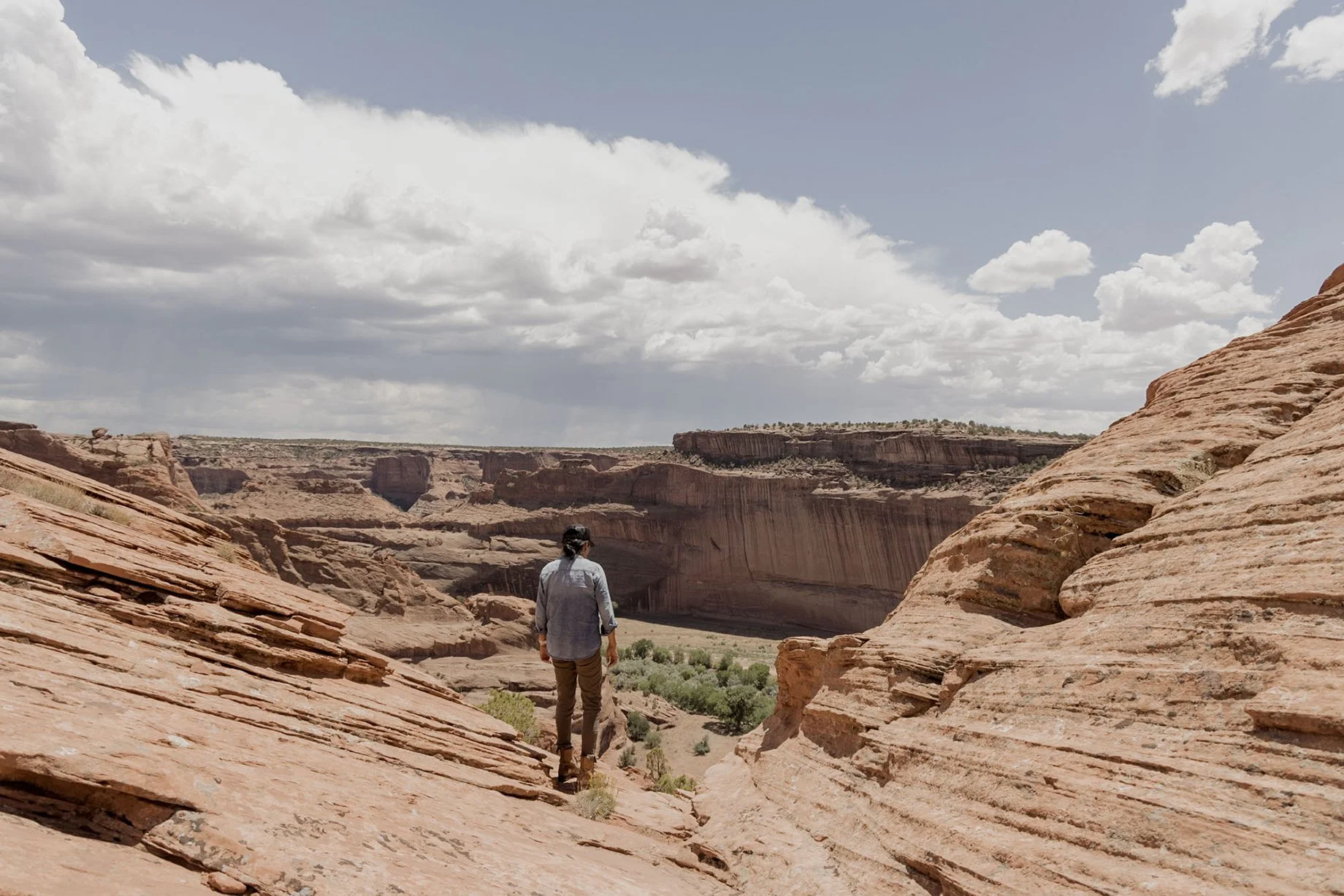
For Minesh, living in the southwest has defined his photography, with ochre tones that speak to both the wild beauty and harsh conditions that define this region. His portraits illustrate the eclectic souls who are drawn to the canyons, cacti, and warmer climate, while his documentary approach offers an authentic snapshot of the realities of living in a sprawling desert.
Capturing Missy and Shyla in their creative elements on native land was a perfect blend of Minesh’s two distinct specialties. The two have trusted him time and again to tell their story authentically, knowing his images help to share their mission on a local and national level. For these two native women, their strong sense of identity grounds them, and they humbly bring that connection back to the New Mexico community through their truly “homegrown” brews.
“I’m in this pretty monumental location completely overwhelmed by all the beautiful surroundings, witnessing the connection these women had to the land. As a photographer, it doesn’t get better than that! ”
This article was originally published on Wonderful Machine.
